Small spaces get a bad reputation. We talk about them apologetically—"it's cozy" or "we make it work." But some of the most thoughtfully designed homes in the world sit in dense urban environments where every square meter earns its place. The secret isn't lowering expectations; it's raising intentions.
After working with hundreds of compact apartments and challenging floor plans, we've identified the strategies that consistently transform cramped into comfortable. None of them require tearing down walls or breaking budgets.
Think Vertical, Not Horizontal
Floor space is finite. Wall height is often underutilized. The most effective small-space designs exploit this asymmetry relentlessly.
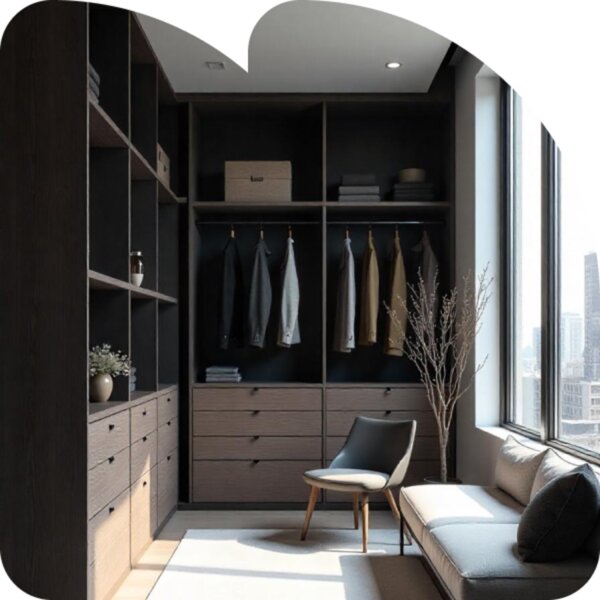
Consider your wardrobe area. Standard hanging rods sit at a single height, wasting valuable space above and below. A double-hang configuration for shirts and folded pants can nearly double your capacity. Add a high shelf for seasonal items, and suddenly the same footprint holds twice as much while staying organized.
- Stack functions — A bench with storage underneath, a bed with drawers, a desk that folds away. Every horizontal surface should consider what can happen beneath or above it.
- Use the ceiling zone — The top 30cm of most rooms goes completely unused. Closed cabinets at ceiling height store rarely-needed items without visual clutter.
- Hang what you can — Floating shelves, wall-mounted desks, and suspended storage keep floors clear, making rooms feel larger while providing the same function.
Edit Ruthlessly
The most powerful tool for small spaces isn't furniture—it's curation. Before optimizing how to store your belongings, question whether each item earns its space.
This isn't minimalism for aesthetics. It's recognizing that in compact homes, every object carries weight beyond its physical mass. That chair you never sit in, those books you won't reread, the kitchen gadget still in its box—they're not just taking up space, they're preventing better solutions.
Small spaces reward intention. When everything present serves a purpose, the room breathes.
Light and Sight Lines
Two rooms with identical dimensions can feel dramatically different based on how light moves through them and what the eye encounters.
- Keep windows unobstructed — Natural light makes spaces feel larger. Avoid blocking windows with tall furniture, and choose window treatments that maximize light when open.
- Create depth with mirrors — Strategically placed mirrors reflect light and create visual depth. Position them across from windows for maximum effect.
- Maintain sight lines — Being able to see from one end of a space to the other reduces the sense of confinement. Open shelving instead of solid cabinets, glass doors instead of opaque—small choices accumulate.
- Consistent flooring — Different flooring materials visually fragment spaces. Running the same material throughout creates flow and perceived size.
Custom Solutions for Odd Spaces
Small apartments often come with architectural challenges—sloped ceilings, awkward corners, irregular walls. Mass-market furniture treats these as problems. Smart design treats them as opportunities.
That weird corner could become a perfectly fitted reading nook. The space under the stairs might hold a complete storage system. The alcove that accommodates no standard furniture might be exactly the right size for a custom solution.
This is where modular, customizable systems shine. When you're not constrained to standard dimensions, awkward becomes advantageous. Every centimeter that would be wasted by off-the-shelf options becomes usable storage tailored to your needs.
The Psychology of Small Space Living
Clutter doesn't just take physical space—it occupies mental bandwidth. Studies consistently show that disorganized environments increase stress hormones and reduce focus. In small spaces where you're constantly aware of your surroundings, this effect amplifies.
Effective small-space design creates calm through order. When everything has a designated place and that place makes sense, the daily cognitive load of managing your environment drops. You stop thinking about where things go and start simply living.
This is the hidden benefit of thoughtful small-space design. It's not just about fitting more stuff or tricking the eye. It's about creating environments where less square meters deliver more quality of life.